
Why Art at Home Matters?
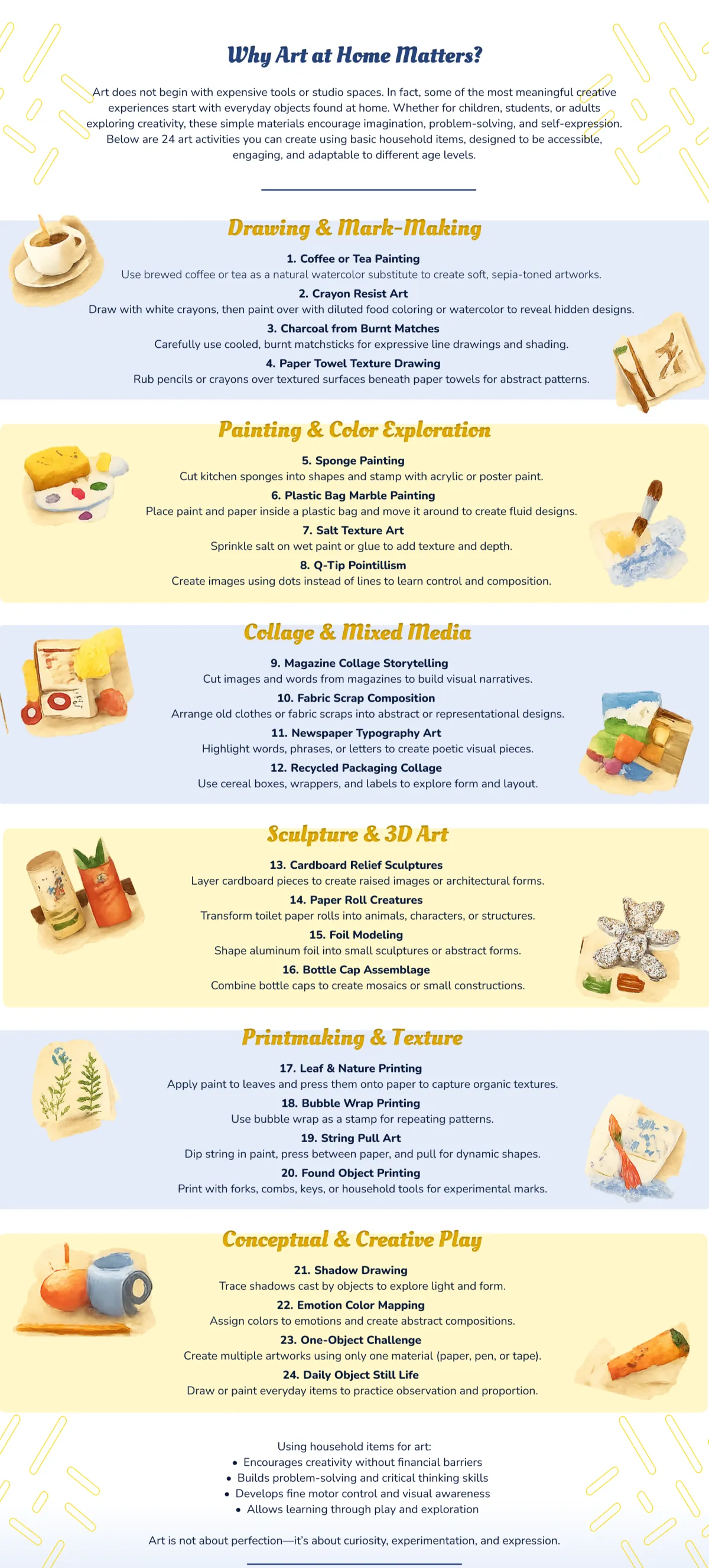
Art does not begin with expensive tools or studio spaces. In fact, some of the most meaningful creative experiences start with everyday objects found at home. Whether for children, students, or adults exploring creativity, these simple materials encourage imagination, problem-solving, and self-expression.
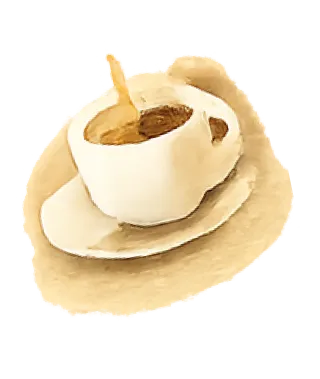
Drawing & Mark-Making
1. Coffee or Tea Painting
Use brewed coffee or tea as a natural watercolor substitute to create soft, sepia-toned artworks
2. Crayon Resist Art
Draw with white crayons, then paint over with diluted food coloring or watercolor to reveal hidden designs.
3. Charcoal from Burnt Matches
Carefully use cooled, burnt matchsticks for expressive line drawings and shading.
4. Paper Towel Texture Drawing
Rub pencils or crayons over textured surfaces beneath paper towels for abstract patterns.
Painting & Color Exploration
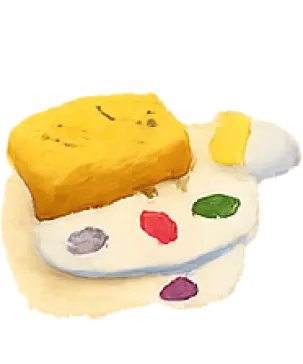
5. Sponge Painting
Cut kitchen sponges into shapes and stamp with acrylic or poster paint.
6. Plastic Bag Marble Painting
Place paint and paper inside a plastic bag and move it around to create fluid designs.
7. Salt Texture Art
Sprinkle salton wet paint or glue to add texture and depth.
8. Q-Tip Pointillism
Create images using dots instead of lines to learn control and composition.
Collage & Mixed Media
9. Magazine Collage Storytelling
Cut images and words from magazines to build visual narratives.
10. Fabric Scrap Composition
Arrange old clothes or fabric scraps into abstract or representational designs.
11. Newspaper Typography Art
Highlight words, phrases, or letters to create poetic visual pieces.
12. Recycled Packaging Collage
Use cereal boxes, wrappers, and labels to explore form and layout.
Sculpture & 3D Art
13. Cardboard Relief Sculptures
Layer cardboard pieces to create raised images or architectural forms.
14. Paper Roll Creatures
Transform toilet paper rolls into animals, characters, or structures.
15. Foil Modeling
Shape aluminum foil into small sculptures or abstract forms.
16. Bottle Cap Assemblage
Combine bottle caps to create mosaics or small constructions.
Printmaking & Texture
17. Leaf & Nature Printing
Apply to leaves and press them onto paper to capture organic textures.
18. Bubble Wrap Printing
Use bubble wrap as a stamp for repeating patterns.
19. String Pull Art
Dip string in paint, press between paper, and pull for dynamic shapes.
20. Found Object Printing
Print with forks, combs, keys, or household tools for experimental marks.
Conceptual & Creative Play
21. Shadow Drawing
Trace shadows cast by objects to explore light and form.
22. Emotion Color Mapping
Assign colors to emotions and create abstract compositions.
23. One-Object Challenge
Create multiple artworks using only one material (paper, pen, or tape).
24. Daily Object Still Life
Draw or paint everyday items to practice observation and proportion.
Addition
Subtraction
Tens and Ones
Place Value
Measuring Length
Fractions
Multiplication
Division
Volume
Two-Dimensional Shapes
Ratios
Unit Rates
Absolute Value
Percent Problems
Graphs and Linear Functions
Using household items for art:
Encourages creativity without financial barriers
Builds problem-solving and critical thinking skills
Develops fine motor control and visual awareness
Allows learning through play and exploration
Art is not about perfection—it's about curiosity, experimentation, and expression.